
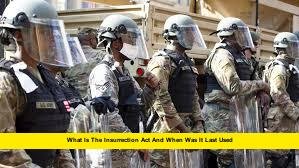
The question what is the insurrection act and when was it last used has moved back into the national conversation as debates over federal authority, public protests, and the role of the U.S. military unfold in early 2026. This centuries-old law grants the president rare emergency powers to deploy troops inside the United States under specific conditions. Understanding how it works, when it has been used before, and why it matters today is essential for anyone following current events and constitutional law.
What Is the Insurrection Act?
The Insurrection Act is a set of federal laws that allows the president to use active-duty military forces or federalized National Guard units within the United States to suppress insurrection, rebellion, or serious domestic unrest that state and local authorities cannot control.
Normally, U.S. troops are prohibited from performing domestic law enforcement under the Posse Comitatus Act. The Insurrection Act is one of the few legal exceptions. It permits military involvement when:
- A state government requests federal help to suppress an uprising.
- Federal law cannot be enforced through normal civilian means.
- Constitutional rights are being denied and state authorities are unwilling or unable to protect them.
The law is designed for extreme situations where public order has collapsed or where the rule of law is being obstructed on a large scale.
Why the Law Exists
The Insurrection Act dates back to the early years of the United States, when the federal government feared that young states might not be able to control armed rebellions. It was created to ensure that the president could act quickly to preserve the Union, enforce federal laws, and protect constitutional rights.
Over time, Congress revised and expanded the law, particularly after the Civil War, to ensure it could be used not only against open rebellion but also against organized violence that blocks justice or civil rights.
How the Insurrection Act Works
When the president invokes the Insurrection Act, several legal steps follow:
- A formal proclamation orders those involved in the unrest to disperse.
- Military forces may then be deployed to assist or replace local law enforcement.
- Troops may perform policing functions, including arrests and crowd control, under federal authority.
Unlike martial law, civilian government remains in place. Courts continue to function, and civil institutions are not suspended. The military operates in support of law enforcement, not in place of constitutional government.
What Is the Insurrection Act and When Was It Last Used in Practice?
The most recent confirmed use of the Insurrection Act occurred in 1992 during the Los Angeles riots following the acquittal of police officers in the beating of Rodney King. Widespread violence, arson, and looting overwhelmed local and state authorities. At the request of California’s governor, the president deployed thousands of federal troops to restore order.
That deployment marked the last time the act was formally invoked. No president has used it since, even during later periods of unrest, including large-scale protests and riots in the 21st century.
Historical Examples of Its Use
Throughout American history, the Insurrection Act has been used sparingly but decisively:
Civil War Era
Presidents relied on the law to suppress secessionist uprisings and enforce federal authority across rebellious states.
Desegregation in the 1950s and 1960s
Federal troops were sent to Southern states to enforce court-ordered school integration when state governments refused to comply and mobs attempted to block Black students from entering schools.
Urban Unrest in the 1960s
The act was used during major riots when local police and National Guard units could not contain the violence.
Each invocation reflected a moment when state control broke down or constitutional rights were under direct threat.
Why It Is in the News Again in 2026
In early 2026, large-scale protests and clashes related to federal immigration enforcement operations in Minnesota reignited discussion of presidential authority under the Insurrection Act. Statements from federal officials about the possibility of deploying active-duty troops prompted intense legal and political debate.
While no formal invocation has occurred as of today, the situation has highlighted how quickly this dormant law can return to relevance when civil unrest escalates and tensions grow between state leaders and the federal government.
Controversy Surrounding the Act
The Insurrection Act is one of the most powerful emergency authorities a president can wield, and that power comes with controversy.
Concerns
- It gives broad discretion to the executive branch.
- It can override the wishes of state governors.
- It allows the military to perform civilian policing roles.
Civil rights advocates warn that improper use could chill free speech, intimidate protesters, and blur the line between civilian and military authority.
Supporters’ View
Supporters argue that the law is a vital safeguard when violence spirals beyond local control or when states fail to uphold constitutional rights. They emphasize that it has been used historically to protect, not suppress, civil liberties.
Legal Limits and Safeguards
Although powerful, the Insurrection Act is not unlimited:
- The president must issue a public proclamation.
- Courts can review whether constitutional rights are violated.
- Congress retains authority to amend or restrict the law.
Still, the statute gives the executive branch wide latitude, which is why its potential use always triggers national scrutiny.
Why Understanding This Law Matters Now
The renewed focus on what is the insurrection act and when was it last used reflects deeper concerns about:
- The balance of power between federal and state governments.
- The role of the military in domestic affairs.
- The protection of civil liberties during times of unrest.
As the United States faces increasingly polarized political and social conditions, the legal tools designed for rare emergencies are once again part of everyday public discussion.
Key Takeaways
- The Insurrection Act allows the president to deploy troops domestically in extreme situations.
- It is an exception to the general ban on military law enforcement.
- It has been used during the Civil War, the civil rights movement, and major urban riots.
- The last confirmed use was in 1992 during the Los Angeles riots.
- It is currently being debated due to unrest and federal-state tensions in 2026.
As this historic law reenters the spotlight, the way it is interpreted and discussed today may shape how Americans understand executive power for years to come. Join the conversation and stay informed as events continue to unfold.

