
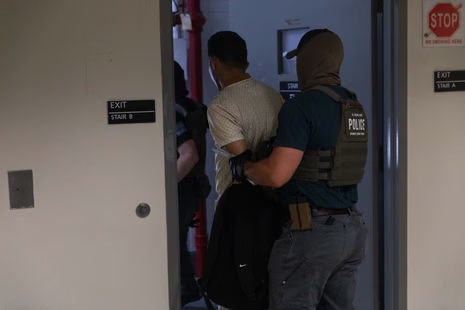
In recent months, a pressing question has dominated headlines and community discussions across the United States: has ICE detained legal residents? As immigration enforcement ramps up under the current administration, verified reports confirm that dozens of individuals with lawful status—including green card holders, asylum seekers with pending cases, and even U.S. citizens—have been swept up in detention operations. These incidents reveal a troubling pattern of aggressive tactics that extend far beyond targeting serious criminals.
The surge in detentions has left families separated, jobs lost, and communities on edge. While officials emphasize public safety priorities, the facts on the ground tell a more complex story.
Share your thoughts below: Have you or someone close to you been affected by recent ICE actions? Your stories help raise awareness.
Explosive Growth in ICE Detention Numbers
Immigration and Customs Enforcement (ICE) detention levels have become a major focus of national debate in 2026 as the federal government expands immigration enforcement and detention capacity. The increase has raised questions about detainee treatment, access to legal representation, and the long-term costs of immigration detention.
The expansion of detention operations has placed additional pressure on existing facilities, raising concerns about overcrowding, medical care, sanitation, and detainees’ ability to communicate with their families and attorneys. Conditions can vary between facilities, making independent oversight and transparent reporting increasingly important.
Rising Detention Numbers and Enforcement Changes
Recent figures indicate that the number of people held in ICE detention has increased substantially, with many detainees having no criminal convictions. By July 2026, approximately 65,765 people were in ICE detention, and about 70.6% had no criminal conviction. However, the absence of a criminal conviction does not necessarily mean an individual has no pending charges or immigration violations.
Funding and Expanding Detention Capacity
Federal funding has supported efforts to expand detention capacity, including plans to establish additional facilities and convert existing buildings for immigration enforcement purposes. The expansion has intensified debate over government spending, detention standards, and the availability of legal assistance.
Growing Public Concern
The increase in detention has prompted renewed scrutiny of enforcement priorities, due process protections, and conditions inside detention centers. As immigration policies continue to evolve, transparency, accountability, and the fair treatment of detainees remain central issues in the national discussion.
Verified Cases of Lawfully Present Individuals Detained
Reports of immigration enforcement actions in 2026 have raised concerns about individuals who have established ties to the United States, including students, parents, and workers with pending immigration applications or valid documentation. These cases highlight the importance of distinguishing between lawful immigration status, pending asylum claims, and other forms of temporary authorization.
Enforcement Actions in Maine
An enforcement operation reportedly began in Maine on January 20, 2026, with nearly 100 people arrested during its first week. Claims about the number of arrests and the criminal histories of those detained require careful verification, as an arrest does not establish that a person has committed a crime.
Detention of an Asylum-Seeking Student
One reported case involved Jean-Pierre Obiang, an 18-year-old student from Gabon who was detained on January 20, 2026, following a minor traffic incident in Westbrook, Maine. He and his family had lived in the state for approximately three years while seeking asylum. Reports indicated that he had no criminal record in Maine.
Mother Detained After School Drop-Off
Another case involved Micheline Ntumba, a mother of four from the Democratic Republic of the Congo. She was reportedly detained after dropping off one of her children at school. Her family said she had a pending asylum claim and had lived in the United States for nearly a decade.
Civil Engineer Detained During Enforcement Operation
Juan Sebastian Carvajal-Munoz, a Colombian civil engineer working in Maine, was detained on January 22 while traveling to work. Witnesses reported that agents smashed his vehicle’s window before taking him into custody. His colleagues said he held a work visa and had no criminal record. He was subsequently reported released.
Broader Questions About Immigration Enforcement
These incidents have intensified concerns about how immigration enforcement affects asylum seekers and people with work authorization. However, pending asylum claims and valid work visas do not necessarily provide permanent immigration status or immunity from detention. Each case depends on the individual’s circumstances and the legal basis for the government’s action.
U.S. Citizens Caught in the Enforcement Net
U.S. citizens have also been detained, often due to mistaken identity, racial profiling, or overzealous enforcement.
In 2025 alone, more than 170 U.S. citizens were held by ICE, some for weeks. One 23-year-old woman born in Maryland was detained for 25 days following a routine traffic stop in December 2025. She was released in January 2026 but required to wear an ankle monitor.
A naturalized citizen from Ecuador was detained in June 2025 after refusing to show identification during a stop. Agents held him until his status was confirmed.
In Minnesota, a Somali-American U.S. citizen attempted to record an ICE operation in January 2026. Despite presenting valid identification, she endured a two-day detention that led to hospitalization.
Native Americans have reported over a dozen similar incidents in early 2025, raising serious questions about profiling practices. Ninety percent of targeted individuals in many operations have Latin American heritage.
Green Card Holders and Asylum Seekers Face New Risks
Green card applicants and asylum seekers with pending cases have encountered unexpected obstacles.
Since November 2025, ICE has detained spouses at green card interviews, even when they have no criminal history. One Turkish immigrant, married to a U.S. citizen in May 2025, was arrested at a routine check-in on November 20. He spent nearly seven weeks in a San Diego facility before a federal judge ordered his release, ruling the detention unjustified.
Asylum seekers who check in regularly have been detained without warrants. In one case, an Angolan asylum seeker was arrested on January 21, 2026, despite his pending case.
These incidents show that lawful presence no longer guarantees protection from detention.
Severe Human and Community Impact
The consequences of these detentions extend far beyond the individual.
In 2025, more than 30 people died in ICE custody—the highest number in two decades. Four additional deaths occurred in the first 10 days of 2026.
Families face sudden separation, children lose parents, and livelihoods collapse. Overcrowded facilities have led to tent camps with harsh conditions and reduced oversight.
Arrest tactics have grown more aggressive. Agents now number in the tens of thousands, resulting in more reported incidents of excessive force.
States struggle to respond. In Maryland, detentions more than doubled in 2025, reaching over 3,300 individuals. California saw deportations climb to 8,200 between January and September.
Know Your Rights During ICE Encounters
Everyone in the United States has certain legal rights during encounters with Immigration and Customs Enforcement (ICE). Understanding these rights can help individuals respond calmly, protect their interests, and avoid unnecessary complications during immigration enforcement actions.
Carry Proof of Immigration Status
Noncitizens should keep their immigration documents accessible when appropriate. These may include a green card, employment authorization document, or other official immigration records. Federal law generally requires certain noncitizens aged 18 and older to carry their registration documents. However, individuals should avoid presenting false documents or providing inaccurate information to immigration officers.
Understand Your Right to Remain Silent
You generally have the right to remain silent when questioned, although specific requirements can vary depending on your immigration status and circumstances. You can ask whether you are free to leave and state that you wish to remain silent. Do not lie about your citizenship or provide fraudulent documents. If you are unsure how to respond, request legal advice.
Request an Attorney if Detained
If ICE detains you, ask to speak with an immigration attorney as soon as possible. In immigration proceedings, individuals generally have the right to obtain legal representation at their own expense, but the government is not generally required to provide a free attorney. Do not sign documents you do not understand without seeking legal guidance.
Know the Rules for Home Entry
If officers come to your home, you can ask them to identify themselves and show any warrant through a window or under the door. An administrative immigration warrant generally does not authorize officers to enter a private home without consent. A valid judicial warrant may provide different authority.
Use Community Alert and Legal Support Networks
Community organizations and immigrant-rights groups may provide legal referrals, emergency assistance, and information about reported enforcement activity. Verify alerts before sharing them, protect sensitive personal information, and contact a qualified immigration attorney for advice specific to your circumstances.
Policy Changes Driving the Surge
The federal government has intensified immigration enforcement, placing greater emphasis on arrests, detention, and deportation rather than alternatives to detention. These policy changes have affected enforcement priorities, detention capacity, and the workload of immigration courts across the United States.
Increased Arrests and Deportation Efforts
Since January 2025, ICE enforcement activity has expanded significantly, with arrests increasing as the administration pursues its mass-removal agenda. The government has also emphasized consequences for immigration violations, including detention and potential criminal penalties in cases where federal law permits prosecution. These measures have generated debate over enforcement effectiveness, public safety, and the impact on immigrant families and communities.
Voluntary Departures Under Increased Pressure
Voluntary departure has also drawn attention as immigration enforcement has intensified. In September 2025, reports indicated that 7,079 individuals chose to leave the United States voluntarily. Such departures can occur for different reasons, including personal circumstances, immigration proceedings, or concerns about possible detention and removal. The circumstances surrounding individual decisions vary, so voluntary departure figures alone do not establish why people chose to leave.
Immigration Court Backlogs Continue to Grow
Immigration courts face substantial backlogs, leaving many people waiting for hearings and decisions on asylum claims and other immigration matters. The departure of experienced immigration judges and staffing challenges have added pressure to an already strained system. Delays can prolong uncertainty for families, complicate access to legal representation, and make it more difficult for courts to resolve cases efficiently.
Long-Term Implications
The combination of increased enforcement, expanded detention, and court backlogs raises important questions about government resources, due process, and the timely resolution of immigration cases. The overall impact will depend on enforcement priorities, court staffing, detention capacity, and the administration of immigration proceedings.
Has ICE Detained Legal Residents? The Facts Speak Clearly
Yes, has ICE detained legal residents in documented cases across the United States? Reports have described incidents involving green card holders, asylum seekers, and even U.S. citizens who were questioned or detained during immigration enforcement operations. However, the circumstances vary, and detention does not necessarily mean an individual was unlawfully present or that authorities acted improperly. Lawful permanent residents generally have rights under U.S. immigration law, while asylum applicants may have different protections depending on their circumstances. These incidents have fueled calls for greater transparency, accountability, and due process as immigration enforcement continues to expand nationwide.
What are your thoughts on these developments? Drop a comment below and stay tuned for the latest updates on immigration enforcement.

