
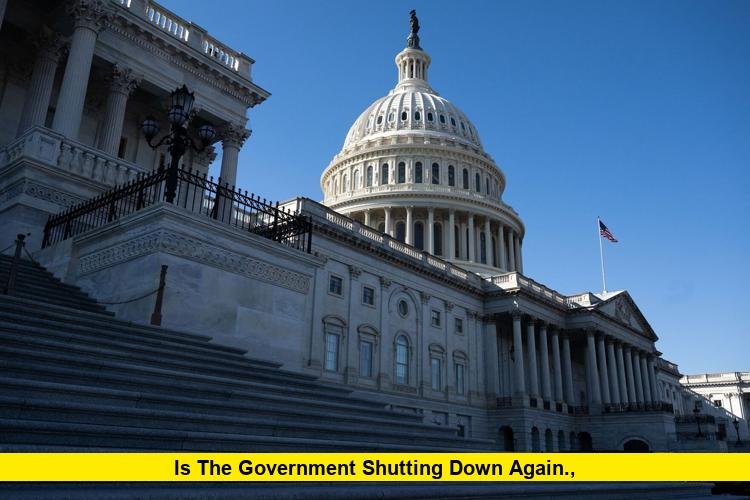
The question echoing across households, offices, and financial markets is is the government shutting down again, as Washington approaches another critical budget deadline with unresolved funding gaps. As of today, several federal agencies remain without long-term appropriations, and unless lawmakers act in time, parts of the U.S. government could see operations pause. Negotiations are active, but the margin for error is narrow, and the consequences of inaction are well understood after years of recurring budget standoffs.
This moment reflects more than a single deadline. It underscores ongoing strain in the federal budgeting process and the growing difficulty of reaching consensus in a divided political environment.
Why the Funding Deadline Matters
Federal agencies depend on annual appropriations passed by Congress and signed into law by the President. When those bills are not completed on schedule, temporary funding measures are often used to keep the government operating. Those stopgap measures are now nearing expiration.
Without new legislation, agencies funded through discretionary spending lose legal authority to continue many functions. That does not mean the entire government stops, but it does trigger furloughs, service delays, and operational shutdowns in affected departments.
The current deadline has drawn attention because multiple major spending bills remain unfinished, leaving little room for delay.
What Is Driving the Current Stalemate
At the heart of the impasse are disagreements over how spending bills should be structured and what policy conditions should accompany them. While some lawmakers argue that funding measures should focus strictly on budgets, others are pushing for provisions tied to border enforcement, regulatory oversight, and administrative priorities.
These disputes have slowed progress, even as negotiators report incremental movement behind closed doors. The challenge has been turning partial agreements into finalized legislation that can pass both chambers of Congress.
Time constraints have intensified the pressure, especially with procedural steps still required before any bill can become law.
Which Parts of the Government Are at Risk
A potential shutdown would be partial, not total. Mandatory spending programs operate under permanent authorizations and continue regardless of annual funding decisions.
Operations That Would Continue
- Social Security payments and disability benefits
- Medicare and Medicaid services
- Military operations and national security functions
- Postal mail delivery
Workers in these areas are considered essential and continue reporting to duty.
Operations That Could Pause or Slow
- Administrative offices in unfunded agencies
- Processing of permits, licenses, and applications
- Customer service operations at certain federal departments
- Some federally managed recreational facilities
The scope of disruption depends on how many agencies lack funding and how long the lapse lasts.
How Federal Workers Are Affected
Federal employees often feel the impact of shutdowns first. Workers classified as non-essential are furloughed, meaning they are temporarily barred from working and do not receive pay during the shutdown period. Essential employees must continue working but may not receive paychecks until funding is restored.
This creates financial stress for thousands of households and can lead to workforce strain, especially if shutdowns extend beyond a few days.
Morale issues and staffing shortages can also ripple into public-facing services, even in agencies that remain operational.
Economic and Public Impact
Shutdowns have broader economic consequences beyond federal offices. Contractors may see delayed payments. Small businesses that rely on federal approvals or contracts can experience cash flow disruptions. Local economies with a heavy federal workforce often feel immediate effects.
Travelers may encounter longer wait times at airports. Taxpayers seeking assistance could face slower responses. While core systems stay in place, the efficiency of government services often declines during funding lapses.
Even brief shutdowns can leave lasting backlogs that take weeks to resolve.
How This Situation Compares to Recent Shutdowns
Over the past decade, shutdown threats have become more frequent. Temporary funding measures have replaced long-term budget planning, creating cycles of uncertainty.
Recent shutdowns have shown that even short disruptions can erode public confidence and create administrative challenges. Agencies must devote time and resources to shutdown planning, then restart procedures once funding resumes.
The current standoff follows a familiar pattern: deadlines approach, negotiations intensify, and final decisions come down to the last possible moment.
What Lawmakers Can Still Do
Congress still has options to prevent a shutdown. Lawmakers could pass a short-term extension to allow more time for negotiations, approve individual appropriations bills, or finalize a broader funding package.
Each option requires coordination between both chambers and swift action to meet procedural requirements. Any delay increases the likelihood that agencies will have to initiate shutdown protocols.
Ultimately, avoiding disruption depends on timely legislative agreement and executive approval.
What Americans Should Watch For
For the public, the most important signals include:
- Votes scheduled in the House and Senate
- Announcements of temporary funding extensions
- Guidance issued by federal agencies about service changes
Agencies typically release contingency plans outlining which services will be affected if funding lapses. These notices provide early clues about potential impacts.
Until legislation is signed, uncertainty remains.
Why This Keeps Happening
The recurring nature of shutdown threats reflects deeper structural issues in how budgets are negotiated. Polarized politics, complex procedural rules, and competing priorities make comprehensive agreements harder to reach.
Short-term fixes often postpone difficult decisions rather than resolve them. As a result, deadlines return with familiar urgency, and the same questions resurface for workers and the public alike.
The current moment is another test of whether lawmakers can move beyond crisis management toward sustainable budgeting.
The Bigger Picture
Beyond immediate disruptions, shutdowns raise concerns about government reliability and long-term planning. Agencies struggle to manage projects when funding certainty is lacking. Public trust erodes when basic operations appear vulnerable to political stalemate.
For many Americans, the issue is not partisan. It is practical. They want services to function, paychecks to arrive, and public institutions to operate smoothly.
That expectation now hinges on decisions being made in Washington.
What Happens Next
As the deadline approaches, negotiations are expected to continue at a rapid pace. A deal could still emerge in time to keep the government open. If not, shutdown procedures would begin, with the possibility of reversal once funding is approved.
The coming hours and days will determine whether federal operations continue uninterrupted or enter another period of disruption.

